Getting Kids to Relax in Front of a Camera
Parents apologise to me constantly. Usually before we have even started, and usually about their own children.
He will not sit still. She goes weird when a camera comes out. They are not really photo children. I have heard every version of it, and I want to be clear: none of it is a problem. Photographing kids on the beach is not about getting children to behave. It is about building a session where their normal behaviour happens to be the thing worth photographing. Every family photoshoot I run with young children is designed around that, and here is what it actually looks like.
Why Look at the Camera and Smile Never Works
Ask a child under about eight to smile, and you get a very specific face. Eyes slightly wide, teeth clenched, the whole thing held for as long as they think you need it. Every parent recognises it. Nobody wants it printed.
The reason is simple. You have asked them to perform an emotion they are not feeling. Adults are practised at faking it, and children are not, which is a compliment to them and a problem for photographs.
So I stop asking. I do not tell children to look at me, I rarely tell them to smile, and I rarely ask them to stay still. What I do instead is give them something to do, then photograph what happens while they do it.
The First Five Minutes Are Meant to Be Wasted
I shoot from the moment we start, and I fully expect nothing from the opening five minutes to make the gallery.
That stretch has one job, which is letting the children get bored with me. A stranger with a large camera is interesting for a few minutes and then, thankfully, is not. Once I have stopped being the new thing on the beach, they go back to being themselves, and that is the point where the session actually begins. Because I work more as a documentary than a directive, I would rather spend five minutes becoming furniture than an hour fighting for attention.
This is also why I ask parents not to promise their children that it will be quick. If a child believes there is a finish line, they will spend the whole session looking for it.
Give Them a Job, Not an Instruction
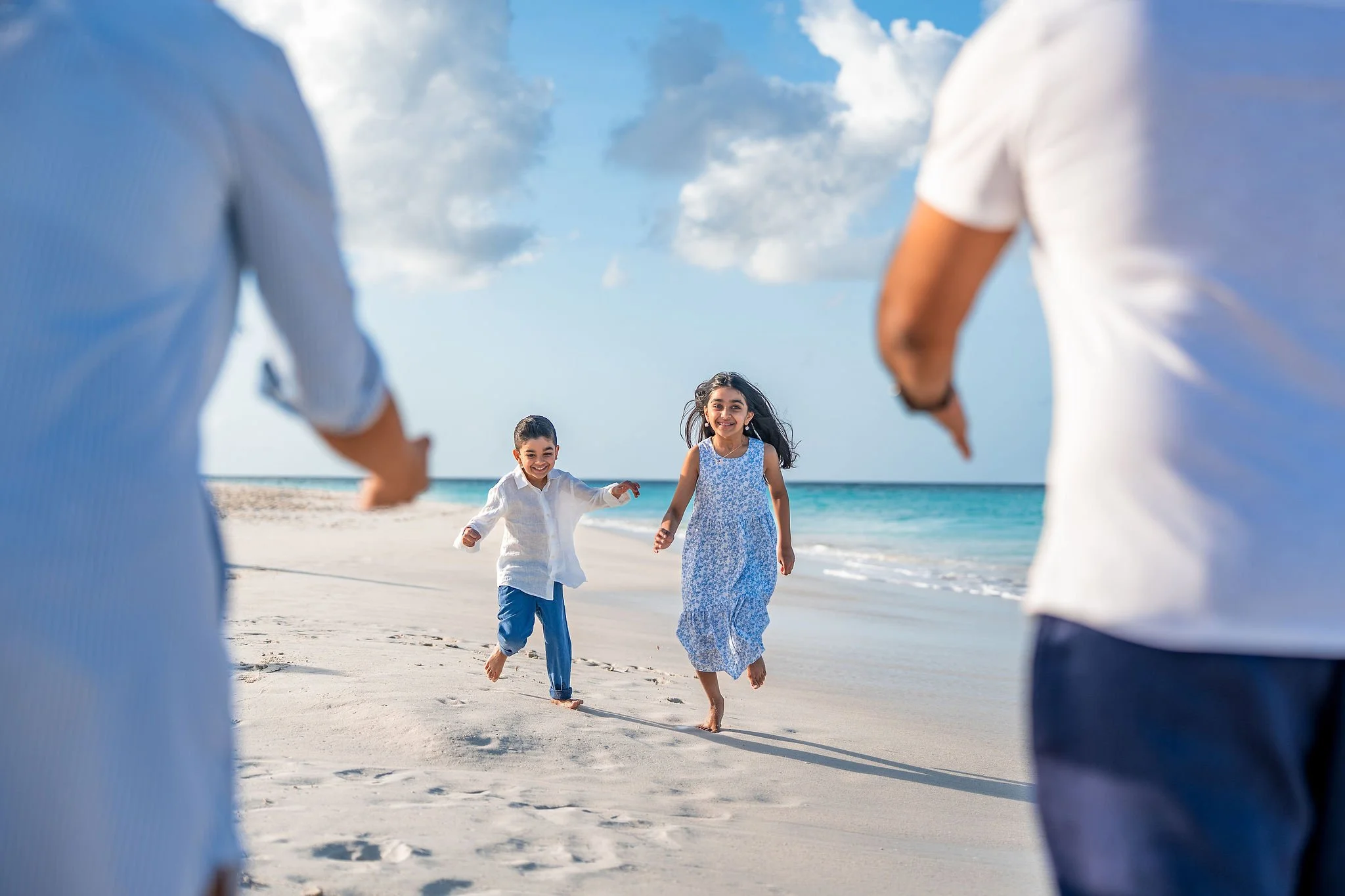
The photograph at the top of this article is the clearest example I have of this working.
Both parents are standing with their backs to me in the foreground, deliberately out of focus. The children are running towards them at full speed, and both are genuinely delighted. Nobody was told to smile. They were told to run to mum and dad, which is an instruction a child can actually follow and enjoy.
That is the whole technique. Replace be happy with do this. Run to your dad. Count the waves. Find me the best shell on this beach. Chase your sister. Whisper a secret to your mother. Every one of those produces a real expression because the child is busy doing something rather than being looked at.
The running one works so reliably that I use some version of it in almost every session with children under ten. Kids run towards people they love with an expression you cannot direct.
Do the Posed Shot First
Most people expect the tidy family portrait at the end, once everyone has warmed up. With small children, that is exactly backwards.
A young child has roughly twenty good minutes in them. Spend those twenty minutes playing and then ask for a neat group photograph at minute forty-five, and you will get the clenched teeth face from a child who is now hot, sandy and finished.
So we take the posed frame early, usually within the first ten or fifteen minutes, once everybody has settled but before anyone has run out. Then it is done, the pressure lifts off the whole family, and the rest of the session can be loose. Parents visibly relax at that point, which shows up in the pictures more than they realise.
What Parents Should and Should Not Do
This is the part nobody expects to be told, and it is the single biggest variable in a family photoshoot with children.
Please stop correcting them. I understand the instinct completely. Your child is not looking at the camera, their hair is in their face, one of them has just sat down in wet sand in nice clothes. But the moment a parent starts issuing instructions, the child stops playing and starts complying, and compliance photographs terribly. Tension in a family is visible in a frame even when everyone is smiling.
What helps instead is simple. Talk to each other rather than to me. Pick your children up. Walk together and have an actual conversation. If I need something specific, I will ask for it, and the rest of the time you are allowed to just be with your family for half an hour, which for a lot of parents on holiday is a rarer thing than they expect.
If both parents want ten minutes on your own at the end while somebody watches the children, say so at the booking stage. It is one of the most common requests I get and one of the least often asked for.
It Changes With Age
Toddlers and under threes. Work around the nap and the meal, not the light. A well-rested toddler at four in the afternoon beats a beautiful sunset with an exhausted one every time. Expect to be carried, held, and occasionally ignored completely. Twenty to thirty minutes is plenty.
Roughly four to nine. The easiest age by a distance. Games work, running works, silly instructions work, and they still find adults funny. This is the range where beach photos with toddlers turn into something closer to organised chaos, and the results are usually the best of any age group.
Ten to thirteen. Self-conscious and aware of how they look. Less silliness, more genuine conversation. Ask them things. Give them a bit of control over what happens next, and they warm up quickly.
Teenagers. Keep it short and give them agency. A teenager who has been told they are doing this for an hour will make sure everyone knows how they feel about it. A teenager asked for twenty focused minutes usually turns out to be excellent company.
Water at the End, Never the Start
At some point, a child is going into the sea. Accept this early, because it is going to happen whether it is planned or not.
So plan it. We shoot everything that needs dry clothes and clean hair first, then the last ten minutes are for getting wet. It works as a reward, which means it functions as the only bribe I need, and it produces the loosest photographs of the entire session. Nobody looks self-conscious while being splashed.
Bring towels and a change of clothes for everyone. Warn the children that the water comes at the end, so they spend the earlier part looking forward to it rather than asking for it.
Timing, Sand and the Practical Bits
Late afternoon is the standard, roughly the hour before sunset, when the light is soft, and the heat has dropped. With very young children, early morning is often better, because toddlers are at their best early and the beaches are close to empty.
Feed everybody beforehand. A hungry child is a short session. Bring water. Keep a small snack in reserve for the middle, not the start, because it stops being useful the moment it is given away.
Do not fight the wind either. Aruba's trade wind is constant, and hair will be in faces. Some of the best frames I have of children here have hair everywhere, and both eyes closed mid-laugh. Trying to control it costs more than it gains.
What the Gallery Ends Up Looking Like
A mix of two things. A handful of clean posed frames, taken early, that will end up on a wall. Then candid kids photography for the rest of the session, a much larger set of pictures of your children being exactly who they currently are, which is the part parents write to me about years later when the child in question is fourteen and no longer runs anywhere. The portfolio gives a decent sense of the balance between the two.
Final Thoughts
Photographing kids on the beach is mostly a matter of removing reasons for them to perform. Give them tasks instead of instructions. Take the tidy photograph early. Let the parents stop managing for half an hour. Finish in the water.
If you are planning a session, tell me their ages when you get in touch, along with anything I should know about how they handle strangers. That shapes the plan more than the location does.
Frequently Asked Questions
My child will not sit still. Is a photoshoot still worth it?
Yes, and it is usually the children who cannot sit still who produce the best galleries. The session is built around movement rather than stillness, using running, games and small tasks instead of posed instructions. Sitting still is only needed for one or two frames, and those are taken early while everyone is fresh.
How long should a beach session with young children last?
Around thirty minutes for toddlers and up to an hour for older children. Young children have roughly twenty genuinely good minutes in them, so a shorter session that ends while everyone is still enjoying it beats a long one that runs past everybody's patience.
What time of day is best for photographing kids on the beach?
The hour before sunset is the usual choice, since the light is soft and the heat has dropped. With toddlers, early morning often works better, because young children are at their best early and the beaches are quieter. Plan around naps and meals before you plan around the light.
Should we bribe our kids to cooperate?
A small snack held in reserve for the middle of the session helps, but the most effective reward is the water. Telling children that the last ten minutes are for getting into the sea gives them something to look forward to and produces the loosest, happiest photographs of the whole session.
Should we tell our children to smile and look at the camera?
Better not to. Asking a young child to smile on cue produces a held, artificial expression that every parent recognises. Talking to each other, picking them up and letting them play works far better, and I will ask directly whenever I need something specific.