Best Time for Photos in Aruba: Golden Hour, Weather & Season Guide
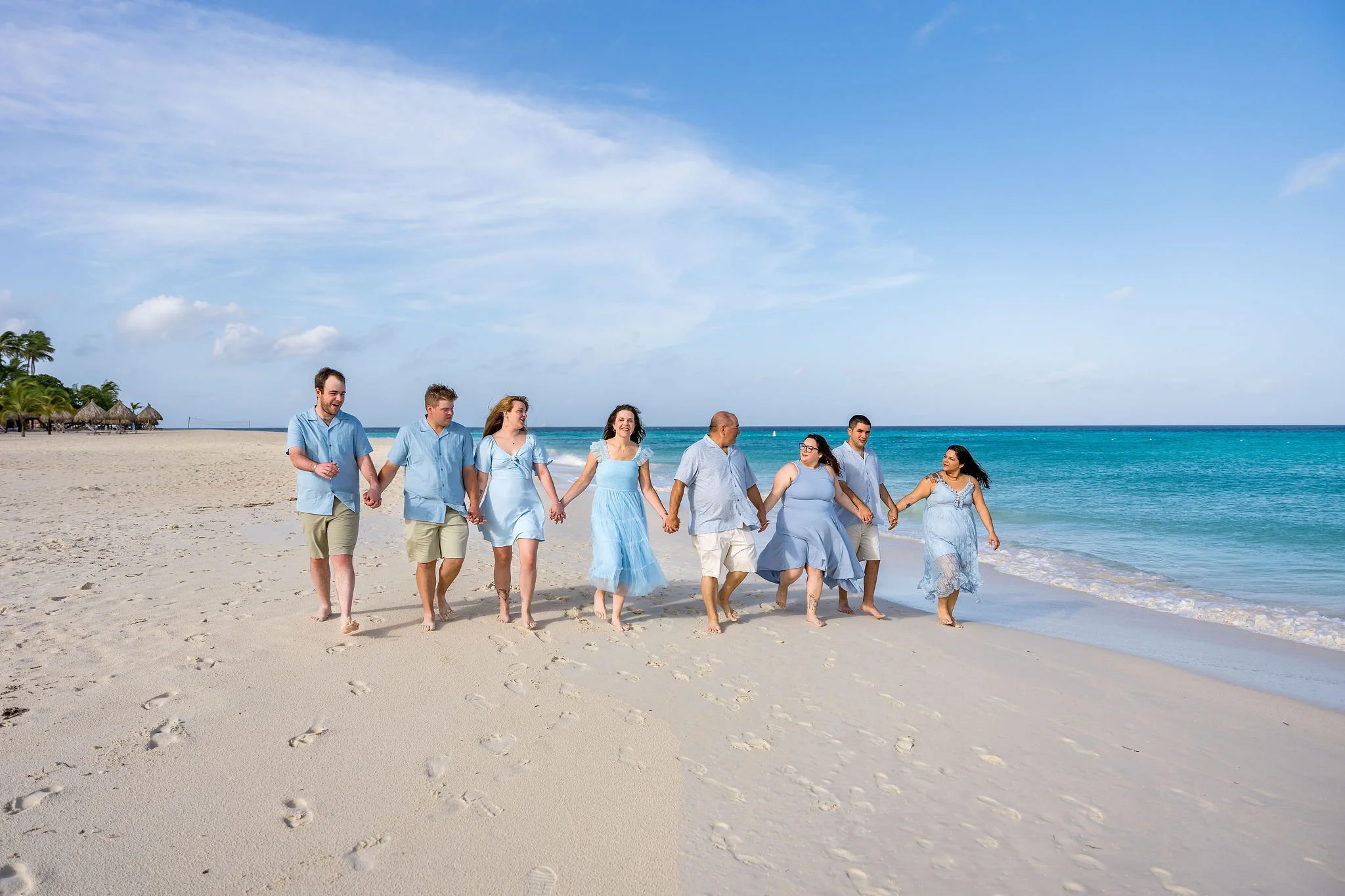
People spend weeks picking the perfect location and then book their shoot for whenever it happens to be free. I get it, but timing is the quiet half of a great photo. The same beach at noon and at 7 am looks like two different places. Aruba makes this easier than most destinations, thanks to steady weather and reliable light, but there's still a right time and a wrong time to point a camera here. This is my honest guide to when to shoot, covering the best light of the day, what the weather actually does year-round, and the seasons worth planning around. Pair it with my guide to the best photo spots in Aruba, and you've got both the where and the when sorted.
Golden Hour in Aruba: The Best Light of the Day
Golden hour is exactly what it sounds like: the roughly one-hour window after sunrise and before sunset when the sun sits low, and the light turns soft, warm, and flattering. It wraps around you instead of casting harsh shadows, and it gives the water and sand that glowing, dreamy quality everyone wants from a Caribbean shoot.
Because Aruba sits close to the equator, sunrise and sunset times barely shift across the year. Sunrise lands around 6:15 to 6:50 am and sunset around 6:30 to 7:15 pm, depending on the season. That means your golden-hour window is fairly predictable whenever you visit. I lean toward sunrise for beaches that get busy, since we get the place almost to ourselves, and sunset when you want those fiery skies.
Both have their own magic, and the right pick depends on your location and the mood you're after. I broke the whole decision down in my guide to sunrise vs sunset in Aruba if you want to weigh them side by side.
Midday Light: What to Avoid
Here's the part people underestimate. From late morning through mid-afternoon, the Caribbean sun is directly overhead and unforgiving. It creates harsh shadows under the eyes, blown-out highlights, and a lot of squinting. Even with the prettiest backdrop on the island, midday is the hardest time to make a portrait look good. If your schedule only allows a midday slot, I'll work with open shade, palm cover, or a covered location to soften things, but given the choice, we always plan around the edges of the day.
Weather in Aruba: What to Expect Year-Round
Aruba is one of the easiest islands in the Caribbean to plan a shoot around, and the weather is why. A few things worth knowing:
● Warm and steady. Temperatures hover around 28-31 degrees Celsius (low-to-mid 80s Fahrenheit) all year, so there's no cold season to avoid.
● Very little rain. Aruba is dry by Caribbean standards. What rain there is tends to fall in short, light bursts between roughly October and January, and it rarely wipes out a shoot.
● Trade winds. A near-constant breeze keeps the heat comfortable and is strongest from about May through August. It's great for movement in flowing fabrics and hair, though very fine or fussy hairstyles can fight it.
● Outside the hurricane belt. Aruba sits far enough south that it's outside the main hurricane zone, so late-summer and autumn trips are far less risky here than on many other islands.
The practical takeaway: there's no month you truly need to avoid for weather. It's more about matching the conditions to what you want.
Best Season for Photos in Aruba
Since the weather cooperates year-round, season is less about avoiding bad conditions and more about crowds, availability, and vibe.
The high season runs roughly December through April, when the island is busiest, beaches are fuller, and my calendar books up fastest. The photos are gorgeous, but popular spots take more patience. The quieter shoulder and off-season months, especially September through November, give you emptier beaches, more relaxed sessions, and easier scheduling. If privacy and a laid-back pace matter to you, that window is genuinely underrated, and I make the full case in my post on why the off-season is perfect for a shoot here.
Timing by Type of Shoot
The best time also shifts a little depending on who's in front of the camera:
● Couples and engagements: golden hour is your friend. Sunset for romance and warm tones, sunrise for privacy on the popular beaches.
● Families with kids: early morning wins. The light is soft, the temperature is coolest, and little ones are usually in a better mood before the midday heat.
● Flamingo Beach: Renaissance Island has its own fixed rule: shoots are only allowed between 7 and 9 am, which happens to be beautiful morning light anyway.
● Weddings: the dry, reliable stretch from roughly January to August gives the most predictable conditions for a day you can't reschedule.
Golden Hour in Aruba: The Softest Light Most Visitors Miss
Golden hour gets most of the attention, but blue hour can be just as beautiful. This is the short period before sunrise or immediately after sunset when the sun is below the horizon, and the sky takes on soft blue, lavender, and pink tones.
The light feels calmer and more cinematic than traditional golden hour. It works especially well for couples, proposals, maternity sessions, and portraits where you want the ocean and sky to feel peaceful rather than bright and tropical.
Blue hour is brief, so timing matters. For sunrise sessions, we may begin before the sun appears to capture those quiet pastel tones. At sunset, staying an extra 10 to 20 minutes can give us a completely different set of images after most people have already left the beach.
Are Cloudy Days Good for Photos in Aruba?
A cloudy forecast does not automatically mean bad photos. In many cases, light cloud cover creates softer and more even lighting than a completely clear sky. It reduces harsh shadows, makes skin tones easier to photograph, and allows us to use locations that would normally be difficult in stronger sunlight.
Clouds can also add texture and drama to the sky, especially during sunset. Some of the most colorful Aruba sunsets happen when clouds catch the remaining light and reflect shades of orange, pink, and purple.
Heavy cloud cover can make the scene feel moodier, but it rarely ruins a session. I adjust the location, camera settings, and posing to make the conditions work. Unless there is sustained rain or unsafe weather, a cloudy day can still produce a beautiful and varied gallery.
How Aruba’s Wind Affects Your Photoshoot
Aruba’s trade winds are part of the island experience, and they can bring a lot of movement and energy into your photos. Flowing dresses, loose fabric, and natural hairstyles often look beautiful in the breeze because they prevent portraits from feeling stiff or overly posed.
The wind can also be stronger in exposed coastal areas, particularly on beaches without nearby buildings, trees, or rock formations. For clients with long hair, lightweight clothing, or detailed accessories, this is something worth planning around.
I usually recommend hairstyles that can move naturally or be adjusted easily during the session. Hair clips, strong hairspray, and a few quick touch-up items can also help. Rather than fighting the breeze, the goal is to work with it and use it to create photographs that feel alive.
What to Wear for Sunrise and Sunset Photos
Your session time can influence which colors and fabrics photograph best. For sunrise, soft neutrals, pale blue, blush, cream, light green, and other gentle tones complement the cool morning sky. These colors create a clean, airy look that works beautifully on quieter beaches.
Sunset can support warmer or richer shades, including rust, terracotta, beige, olive, deep blue, and muted jewel tones. White and neutral clothing also works at sunset because it reflects the warm light and keeps the overall gallery timeless.
Lightweight fabrics are usually the most comfortable choice in Aruba’s climate. For families or groups, coordinated colors work better than identical outfits. Choose two or three complementary shades and avoid large logos, neon colors, and very busy patterns that may distract from faces and the surrounding scenery.
How the Location Changes the Best Time to Shoot
Not every Aruba location looks best at the same time. The direction of the sun, nearby buildings, palm trees, rock formations, and the coastline's position can all change how light reaches a particular spot.
An open beach may look beautiful at both sunrise and sunset, while a location surrounded by rocks or structures may lose direct light earlier. Some popular beaches are also significantly quieter in the morning, making sunrise a better choice even when the sunset light is equally attractive.
How to Plan Around the Light
A few things I tell every client. Book with a little buffer so we're not forced into a bad-light slot. Plan to arrive at the location a few minutes early so we can shoot the moment the light is right, not scramble to set up. And stay flexible: on the rare day the weather turns, shifting by an hour or swapping to a sheltered spot usually saves the shoot completely. When you book with me, I handle all of this planning so you just show up and enjoy it.
Final Thoughts
The best time for photos in Aruba isn't complicated: shoot at golden hour, lean on the island's dependable dry weather, and pick a season that matches the pace and privacy you want. Get the timing right and even a simple location turns into something special. That's the part I love dialing in for every client. At G10 Studio, I plan each session around the light so your photos capture Aruba exactly as it felt. When you're ready, inquire with G10 Studio to book your photoshoot, and we'll lock in the perfect time and place.
Frequently Asked Questions
What is the best time of day for photos in Aruba?
Golden hour: the first hour after sunrise or the last hour before sunset. The light is soft and warm, shadows are flattering, and beaches are far less crowded than midday. Avoid the harsh overhead sun from late morning to mid-afternoon.
When is golden hour in Aruba?
Because Aruba is close to the equator, times barely change through the year. Sunrise is around 6:15 to 6:50 am and sunset around 6:30 to 7:15 pm, so golden hour falls roughly in the hour after sunrise and the hour before sunset.
What is the best time of year to visit Aruba for photos?
Any month works because the weather stays warm and dry. For the best balance of reliable light and fewer crowds, the shoulder and off-season months of September through November are ideal. High season (December to April) is beautiful but busier.
Does it rain much in Aruba?
Not much. Aruba is one of the driest islands in the Caribbean. What little rain falls tends to come in short, light bursts between roughly October and January and rarely disrupts a shoot.
Is Aruba affected by hurricanes?
Aruba sits far enough south to be outside the main hurricane belt, so it's much lower risk than most Caribbean islands during late-summer and autumn trips. That makes off-season photo trips here safer than people expect.